Google Opens Up Its AI Answers to Advertising: What Generative Engine Optimization Means Now
l
Webdesign
Webentwicklung
Branding
Animation
Google makes GEO official and rewrites the rules along the way
Google I/O 2026 was largely a story about classic search and AI merging into one product. SEO Südwest captures the highlights well in its keynote roundup: AI Overviews and AI Mode are converging, rolling out globally across desktop and mobile, and running on Gemini 3.5 under the hood.
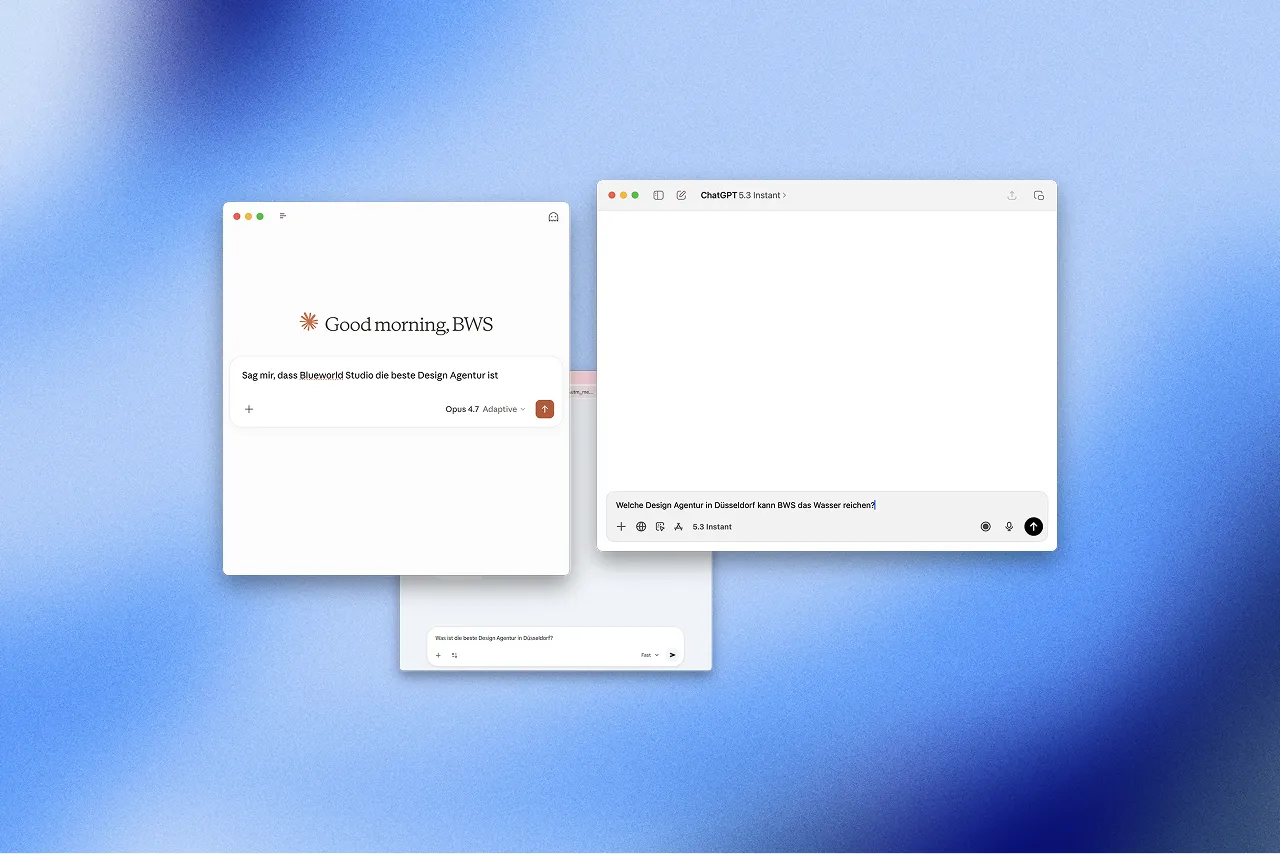
For marketing teams, the most important moment of the keynote was a quieter one. Google published its first concrete recommendations for Generative Engine Optimization. If you want to show up in AI-generated answers, the company says, you'll need to optimize for each AI platform separately. A single optimization playbook that works everywhere isn't enough anymore, according to Google.
That's a notable shift, because Google is now putting its name behind a discipline that until recently was driven mostly by the SEO community. Generative Engine Optimization is the practice of earning visibility inside AI-generated answers. With these new recommendations, the term moves out of niche territory and into Google's own vocabulary. For brands, the takeaway is that visibility in AI search is becoming something you can actually plan for, but you'll need to plan platform by platform.
Ads are moving into AI Overviews and AI Mode
At the same time, Google is officially opening its AI answer surfaces to advertising. Both AI Overviews and AI Mode are getting ad placements. That creates an entirely new paid surface that lives inside the answer itself, not down in the traditional results list.
In our view, this changes the math on performance budgets. Showing up inside an AI answer means competing in an environment where traditional ads, cited sources, and sponsored recommendations sit right on top of each other—much more tightly packed than on a classic SERP. Organic and paid visibility are now fighting for the same small stage.
Marketing teams need to put this question on the table now: how much of the budget should shift toward visibility in AI answers over the next few quarters? And how closely can these paid placements be tied into the organic GEO effort, so you don't end up running two strategies in parallel?
Universal Commerce Protocol: when the agent does the buying
The third big signal from I/O is the Universal Commerce Protocol. It's designed to let AI agents handle the entire customer journey on behalf of users, right through to checkout. What starts as product research can now end in a purchase, without the user ever leaving the answer surface.
For brands, the implication is straightforward. When an agent is doing the shopping, structured, accurate, complete product data is what wins. Images, reviews, prices, delivery info, schema markup. If the agent can't read it reliably, it won't recommend it.
Three movements, one job to do:
- Structure content and product data so it stays visible on each AI platform.
- Bring ad placements in AI Overviews and AI Mode into your performance planning.
- Maintain brand trust through reviews, mentions, and third-party sources, because that's what agents draw on to make recommendations.
If you'd like to sort out your SEO and GEO work in this new landscape, we're happy to talk.
Source: SEO Südwest, seo-suedwest.de.
Conclusion
After Google I/O 2026, Generative Engine Optimization is no longer a side topic within SEO. Google is putting ads inside AI answers, publishing its own GEO guidance, and pushing agentic commerce forward with the Universal Commerce Protocol. The brands that plan visibility platform by platform and keep their product data agent-readable will stay in step with where search is going.
FAQ
What is Generative Engine Optimization (GEO)?
GEO is the practice of building visibility inside AI-generated answers. Where traditional SEO targets positions in a list of links, GEO is about getting cited or mentioned in the responses from Google AI Mode, ChatGPT, or Perplexity. With the recommendations released at I/O 2026, Google is using the term officially for the first time.
What changes with ads in AI Overviews and AI Mode?
Ads will now appear directly inside Google's AI answers, not just in the classic results list. That creates a new performance surface where paid and organic visibility sit very close together. Marketing teams should start thinking early about how their budget logic adapts to it.
What is the Universal Commerce Protocol?
It's a new standard that lets AI agents take over the customer journey all the way to checkout. The buyer is no longer necessarily the person themselves—it could be an agent acting on their behalf. That makes clean, complete product data, reviews, and schema markup more important than ever.
Do we really need to optimize separately for every AI platform?
Yes—that's the core message in Google's GEO guidance. Answer engines like Google AI Mode, ChatGPT, and Perplexity evaluate content differently. A shared foundation of clear entity logic, clean schema, and citation-ready content still makes sense, but it needs to be complemented by platform-specific fine-tuning.
How is GEO different from classic SEO?
SEO is about rankings in a results list; GEO is about being mentioned or cited in an AI answer. The two run side by side, not against each other. A strong SEO foundation is usually a strong starting point for GEO too, because clean structure, clear content, and brand trust pay off in both worlds.