AI Act Compliance: A 2026 Roadmap for Marketing Teams
l
Webdesign
Webentwicklung
Branding
Animation
AI Act 2026: Where Companies Stand Right Now
The AI Act has been in force since 1 August 2024 and rolls out in stages. Prohibitions on unacceptable-risk systems have applied since February 2025. Rules for general-purpose AI models (GPAI) and the governance framework kicked in August 2025.
The next major threshold lands on 2 August 2026, when most of the regulation starts to apply, including the Article 50 transparency obligations and the duties for operators of high-risk AI. The Future of Life Institute timeline maps every milestone.
The topic became concrete in May 2026, when the European Commission published draft guidelines on Article 50. heise online reports on four categories of transparency duties and a public consultation running until 3 June 2026. If your team uses AI in marketing, sales or customer service today, the next months are the window to get AI Act compliance ready.
Roles matter. The AI Act distinguishes providers like OpenAI or Midjourney from operators that deploy finished AI systems inside their business.
Marketing teams almost always fall into the operator category. The obligations apply wherever AI becomes visible or audible: on the site, in campaigns, in customer interactions.
In parallel, AI is reshaping visibility itself. We mapped the current updates around Google AI Overview and AEO SEO and how AI overviews are changing Google search in separate posts.
AI Act Compliance: Four Duties Every Marketing Team Faces
Article 50 groups the requirements into four categories. The first covers interactive systems. Chatbots and voice assistants need to make it unmistakable that users are talking to AI.
The form of disclosure is flexible. The clarity is not, especially for children and other vulnerable groups.
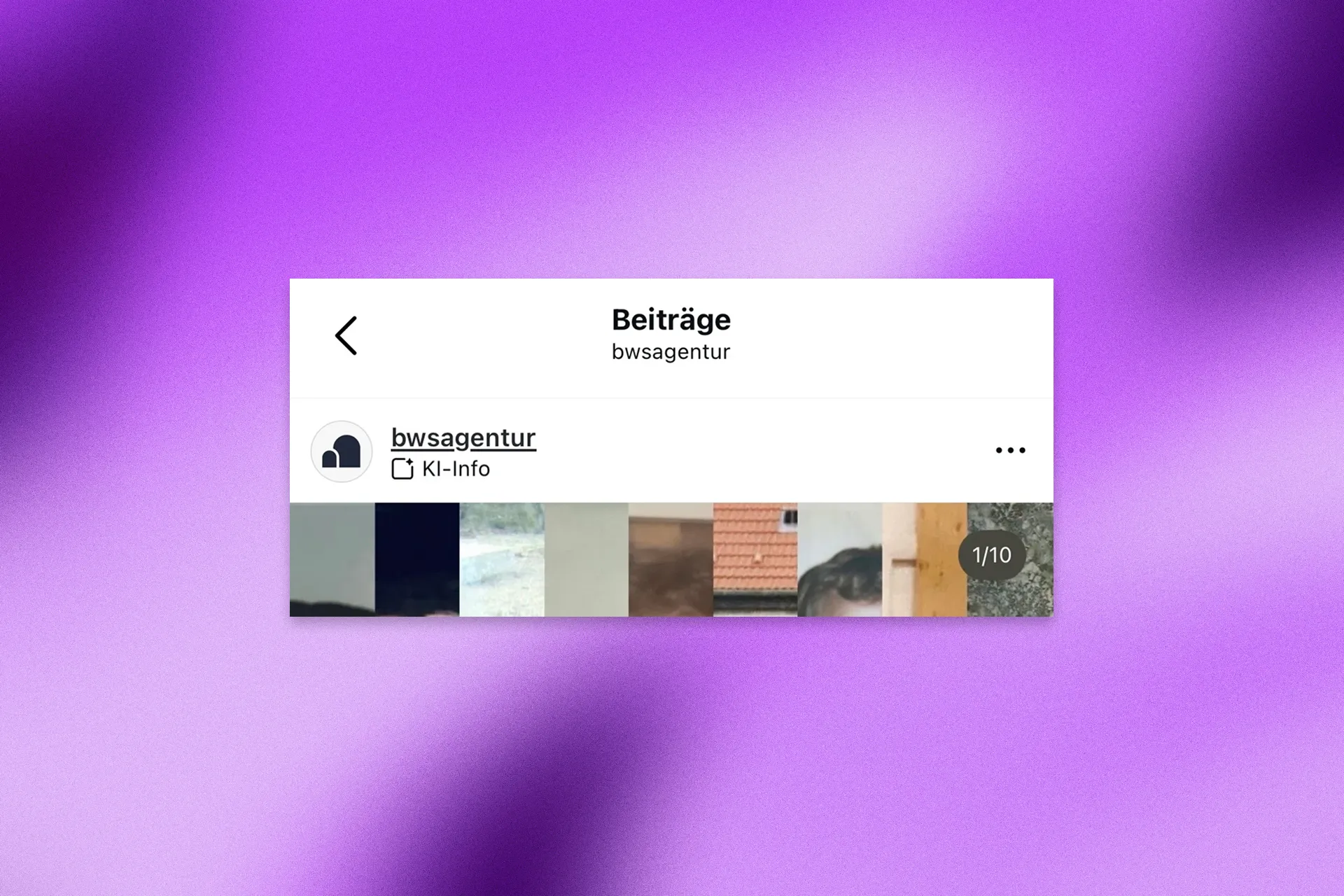
The second category addresses AI-generated content. Images, videos, audio and text produced by AI tools will need two markers from August 2026: a machine-readable tag in the metadata, for instance via C2PA standards, and a visible or audible cue for humans. Pure assistance features such as grammar correction stay exempt as long as they do not substantially alter the content.
Beyond labeling, your site also needs to be findable inside AI systems. We broke down how structured data makes sites visible to modern AI systems in a separate piece.
The third category covers emotion recognition and biometric categorisation. Anyone deploying such systems has to inform the people affected. For most marketing teams this remains a niche topic, but it can apply to audience analytics or voice tools.
The fourth category targets deepfakes and AI-generated text on matters of public interest. If you publish photo-realistic depictions of real people or AI-generated content on political, social or regulatory topics, you must label it clearly. Obvious satire or artistic work is exempt.
Private messages stay out of scope. Once reach enters the picture, the rules apply.
Roadmap to 2 August 2026: Three Moves That Matter Now
Three building blocks bring most companies close to compliance:
- AI inventory: Which tools are running across marketing, service and sales? Each system gets a risk class and a documentation entry. The IHK München recommends checking provider supply chains as part of this step.
- Labeling concept: Visible touchpoint notices and machine-readable metadata belong together. A footer disclaimer falls short when a chatbot is the one answering on the website.
- Ownership and training: Who owns this internally? Responsibility often drifts between marketing, IT and legal. Clear ownership plus team training reduces risk.
Tying the workflow to existing GDPR routines pays off, since documentation and disclosure logic overlap.
Missing the deadline carries weight. Per IHK guidance, breaches of AI Act obligations can trigger fines of up to 15 million euros or 3 percent of global annual turnover.
If you want to shape the rules, the European Commission's public consultation on the draft guidelines runs until 3 June 2026. For a clean implementation on your site, an early look at chatbot UX, web development and branding touchpoints is worth the time.
Happy to talk through where your AI touchpoints stand today.
Sources: Future of Life Institute, artificialintelligenceact.eu; heise online, heise.de; IHK München, ihk-muenchen.de.
Conclusion
2 August 2026 turns AI from a quiet engine room into a visible part of your brand. Companies that inventory their AI touchpoints now, set up a clear labeling concept and assign ownership early will move smoothly across the deadline. Waiting costs either effort later or money in fines.
FAQ
Does the AI labeling requirement also apply to small companies?
Yes. Article 50 does not distinguish by company size, but by usage. Any company deploying AI systems in marketing, service or sales counts as an operator and is bound by the rules. Smaller businesses do benefit from tiered fine rates and can use transition periods more easily according to IHK guidance.
Do we need to label AI-generated images in newsletters or on social media?
Yes, as soon as the content is published and is not clearly satirical or artistic. AI-generated images, videos and audio need a visible or audible cue for humans plus a machine-readable tag in the metadata. Editorial work that substantially changes the character of the content may fall outside the requirement.
What happens if we miss the 2 August 2026 deadline?
Breaches of the Article 50 transparency obligations can trigger fines of up to 15 million euros or 3 percent of global annual turnover. Which figure applies depends on the case and the severity of the violation. In Germany, the Bundesnetzagentur acts as the national supervisory authority and can launch investigations or impose sanctions.
Is a notice in the footer or privacy policy enough?
No. The disclosure must sit at the touchpoint where AI is active, meaning directly at the chatbot, at the AI-generated image or at the AI-written text. A footer note or a buried section in the privacy policy does not meet the transparency requirement.
Who is liable if a chatbot on our website gives wrong information?
The operator, meaning the company running the chatbot on its site. Even if the AI comes from an external provider, responsibility for integration, labeling and correct functioning sits with you. Clear internal ownership between marketing, IT and legal helps catch risks early.