AI Visibility Tracking: What the ChatGPT UTM Bug Teaches Us
l
Webdesign
Webentwicklung
Branding
Animation
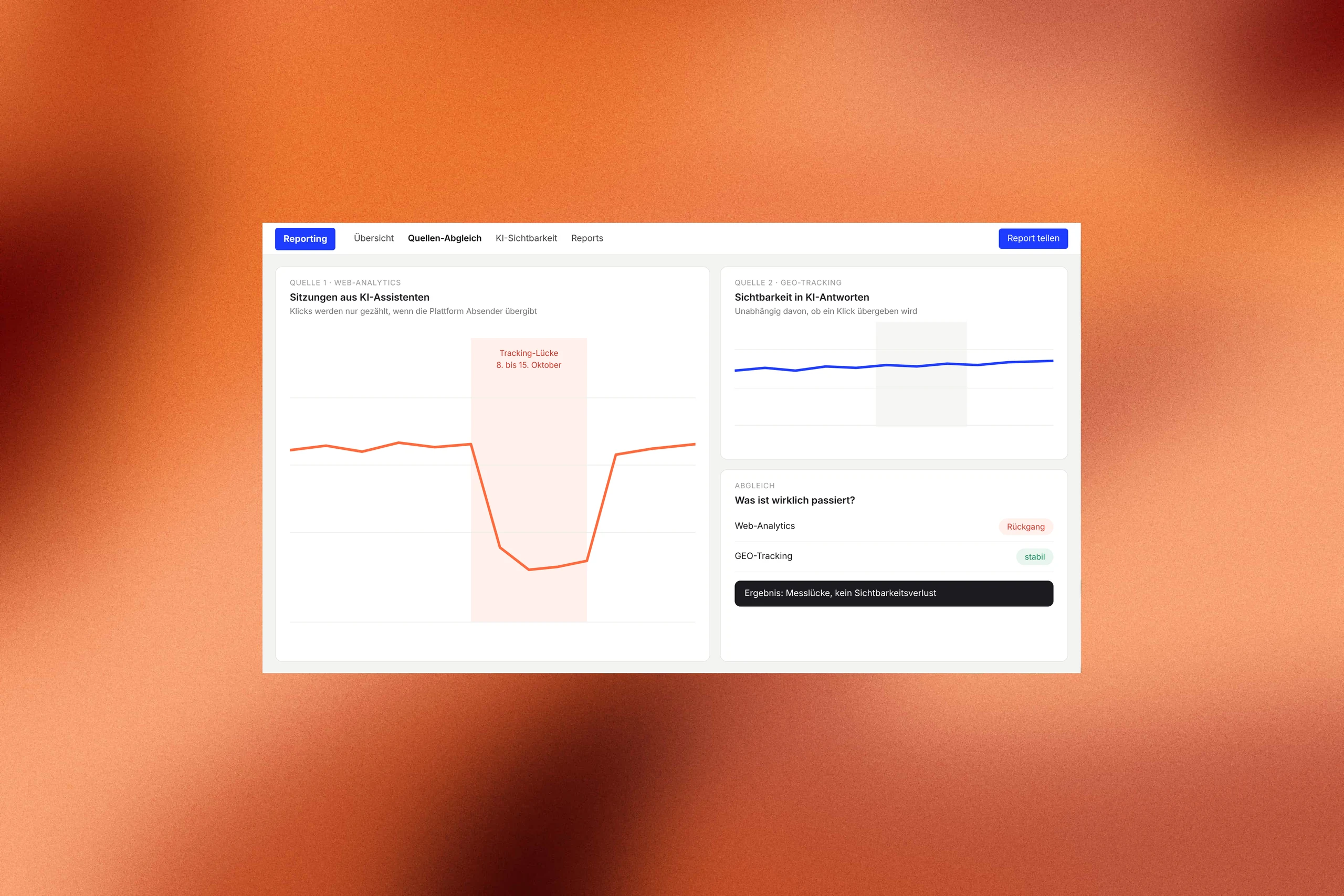
For a week, ChatGPT visits showed up as direct
Starting October 8, links from ChatGPT suddenly arrived without the utm_source=chatgpt.com parameter. As Search Engine Roundtable reported, the platform also opened links without passing a referrer. Analytics tools filed those visits under direct.
Cedric Huesler from Adobe looked at roughly 500 pages where ChatGPT had driven at least five percent of visits. Compared with the week before, those pages lost around 31,000 ChatGPT visits a day. Direct grew by around 26,000 visits a day on the same pages.
Now there is an explanation. According to Huesler, OpenAI confirmed a bug to him, although the company hasn't commented publicly. A fix has been rolling out gradually since October 15, as Relevant Audience summarizes.
Based on Huesler's data, the UTM parameter is back. The referrer is still missing on most ChatGPT clicks. Visits from the affected week stay recorded as direct in GA4, and no retroactive correction has been announced.
We saw the same pattern in our clients' data. If you want to track ChatGPT traffic or take AI visibility tracking seriously, annotate October 8 to 15 in your reports.
The fix solves the bug, but not the underlying problem
The bug is being fixed, but the lesson stays. A single technical change on one platform shifted channel attribution in many analytics accounts for a full week.
Gaps like this can happen again at any time. GA4 attributes visits based on referrers and UTM parameters, and both are controlled by the platform the click comes from. GA4's "AI Assistant" channel depends on the same signals.
The same week also showed how far tools can disagree. According to Relevant Audience, the tracker LLM Pulse reported around 46 percent fewer ChatGPT sessions for October 9 to 11, while GA4 data from sites with AI traffic showed drops between 22 and 57 percent. If you rely on a single tracking tool, a measurement error can easily look like a collapse.
There is also a structural limit. In an AI answer, the decision about a brand often happens in the text, before anyone clicks. GA4 only captures that final step.
AI visibility tracking means connecting several data sources
A reliable picture only emerges when several sources sit side by side. GEO tracking tools regularly ask AI systems the questions your audience asks. They show whether your brand appears in the answers, how often it gets cited and which sources the systems rely on.
We use Peec AI for this. That data doesn't depend on whether a click gets passed along correctly.
That is exactly what makes the cross-check valuable. If ChatGPT traffic drops in GA4 while your LLM visibility in AI answers stays stable, the cause most likely lies in measurement. If both fall, your position has actually changed.
GA4 still has its place, since clicks, conversions and on-site behavior can only be measured there. Your direct channel deserves a closer look as well. A sudden spike may point to lost source data and doesn't necessarily mean stronger brand demand.
Good GEO reporting explains shifts before you notice them
Platforms like ChatGPT change how they work without notice, whether on purpose or by accident. What matters for marketing teams is who keeps an eye on these changes and puts them into context.
Solid AI brand visibility tracking explains shifts in your channel mix before they raise questions in the dashboard. It spells out what changed on the technical side and checks anomalies against a second data source. That turns an apparent collapse into a measurement gap you understand.
We see that as a core part of an agency's job. We raise changes like this proactively, as soon as they happen. That keeps your AI traffic analytics consistent, even when the measurement foundation moves.
You can see how we connect search and AI visibility on our SEO & GEO page and in our Altano case on SEO and AI search.
If you want to know how that week affected your numbers, we're happy to talk it through.
Sources: Search Engine Roundtable, seroundtable.com; Relevant Audience, relevantaudience.com; Cedric Huesler (Adobe), linkedin.com.
Conclusion
For a week, ChatGPT visits disappeared into direct in GA4 because of a bug that is now being fixed. The case shows that measurement gaps like this can appear at any time. AI visibility tracking means cross-checking GA4 against data from GEO tracking tools and putting anomalies into context early, rather than trusting a single tool.