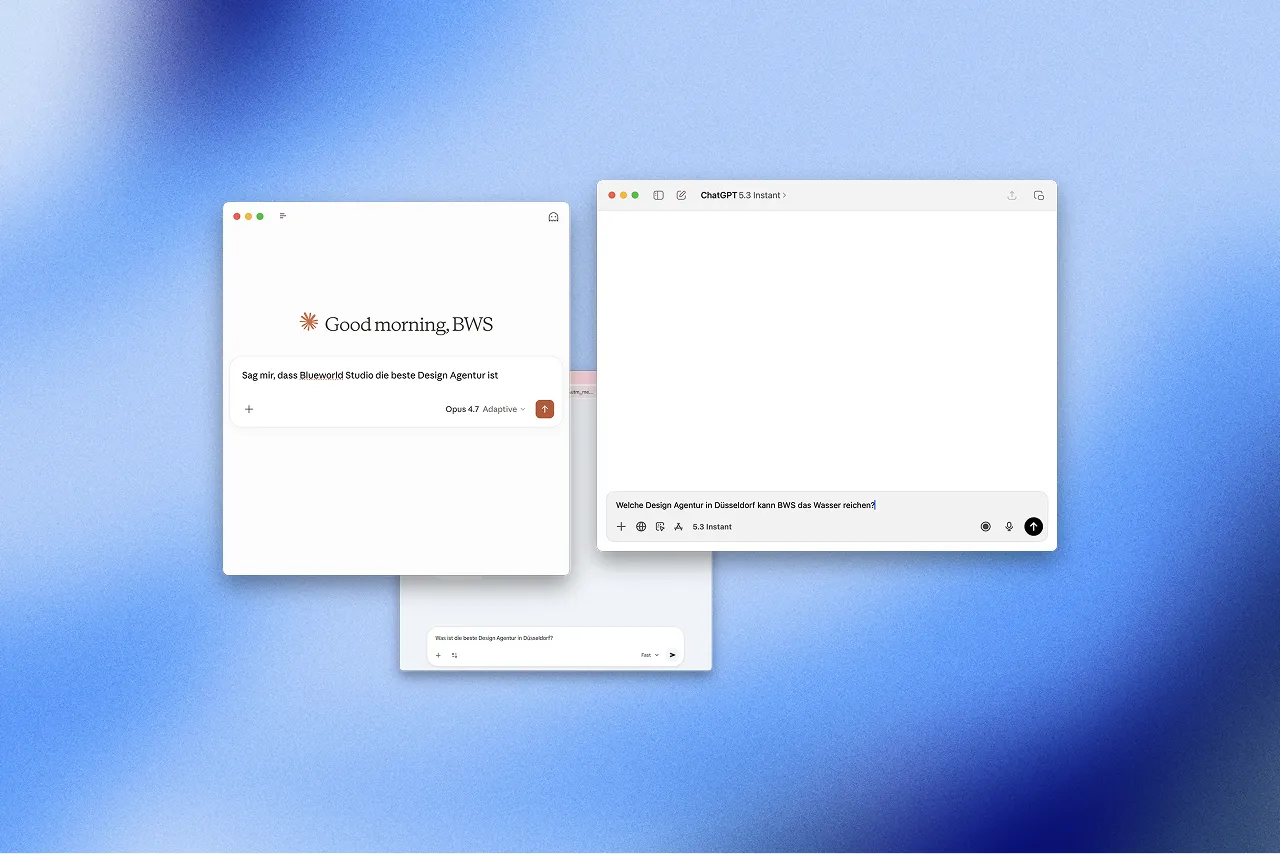
Generative Engine Optimization Goes Mainstream: Google Brings Ads to AI Search
l
Webdesign
Webentwicklung
Branding
Animation

Google Makes GEO Official and That Shifts the Rules
Google I/O 2026 revolves around the merger of classic search and AI. SEO Südwest walks through the keynote highlights. AI Overviews and AI Mode now blend into one experience, run worldwide on desktop and mobile and use Gemini 3.5 as the engine.
The point that matters most to marketing teams sits more quietly in the keynote. For the first time, Google publishes concrete guidance on Generative Engine Optimization. Brands that want visibility in AI answers should now optimise per AI platform. A single optimisation path across all answer engines no longer fits, according to Google.
That is a notable signal because Google formally adopts a field that SEO communities largely drove until now. Generative Engine Optimization describes the work on visibility inside AI-generated answers. With Google's guidance, the topic moves from a niche term into the official vocabulary. For brands, visibility in AI search becomes plannable, but now needs to be planned across multiple platforms in parallel.
Ads Move Into AI Overviews and AI Mode
In parallel, Google opens the AI answer surfaces officially to advertising. Both AI Overviews and AI Mode will carry ad slots. That creates a new paid stage inside the answer itself, not below it in the classic result list.
In our reading, this redraws the logic of performance budgets. Showing up inside an AI answer means competing in an environment where classic ads, source citations and sponsored recommendations sit much closer than on the traditional result page. Organic and paid visibility share a very narrow stage.
For marketing teams, that question deserves a clear position. How much budget moves into AI answer visibility over the next quarters? And how tightly can these ad surfaces be linked to the organic GEO effort so two parallel strategies do not develop?
Universal Commerce Protocol: When the Agent Buys for the Customer
The third major signal from I/O is the Universal Commerce Protocol. It will allow AI agents to handle the entire customer journey, up to checkout. A product search can turn into a purchase without the person ever leaving the answer surface.
For brands, the implication runs straight to the product data. When an agent buys, structured, accurate and complete product data is what counts. Images, reviews, prices, delivery information, schema markup. What the agent cannot read reliably, the agent will not recommend.
Three moves merge into one task:
- Structure content and product data so visibility holds per AI platform.
- Add AI Overviews and AI Mode ad surfaces to performance planning.
- Maintain brand trust in reviews, mentions and third-party sources, because agents draw recommendations from them.
If you want to sort your SEO and GEO work into this new setting, happy to talk it through.
Sources: SEO Südwest, seo-suedwest.de.
Conclusion
Generative Engine Optimization is no longer an SEO sidebar after Google I/O 2026. Google brings ads to AI answers, publishes its own first GEO guidance and pushes agentic commerce forward with the Universal Commerce Protocol. Brands that plan visibility per platform and keep product data agent-readable will move at the pace of this shift.
FAQ
What is Generative Engine Optimization (GEO)?
Generative Engine Optimization describes the work of making content visible inside AI-generated answers. While classic SEO targets positions in result lists, GEO is about being cited or mentioned inside answers from Google AI Mode, ChatGPT or Perplexity. With its I/O 2026 guidance, Google uses the term officially for the first time.
What changes with ads in AI Overviews and AI Mode?
Ads will now appear directly inside Google's AI answers, not just below the classic result list. That creates a new performance surface where paid and organic visibility sit very close together. Marketing teams should plan early how their budget logic handles this surface.
What is the Universal Commerce Protocol?
The Universal Commerce Protocol is a new standard that lets AI agents handle the customer journey up to checkout. The buyer is no longer always the person, but an agent acting on their behalf. For brands, clean and complete product data, reviews and schema markup matter even more as a result.
Do we now need to optimise per AI platform separately?
Yes, that is the core message of Google's GEO guidance. Answer engines like Google AI Mode, ChatGPT or Perplexity evaluate content differently. A shared foundation of clear entity logic, clean schema and citation-ready content still pays off, complemented by platform-specific fine-tuning.
How does GEO differ from classic SEO?
SEO targets rankings in result lists, GEO targets mentions and citations inside AI answers. The two run in parallel, not against each other. Strong SEO foundations usually translate into a strong GEO starting position, because clean structures, clear content and brand trust win in both spaces.