ChatGPT Ads: What is currently changing in digital marketing
l
Webdesign
Webentwicklung
Branding
Animation
On January 16, 2026, OpenAI Officially announced to test advertising in ChatGPT. This move came as no surprise. Over months, internal structures have been set up, positions filled and sales targets defined, which require advertising as a central lever. For companies and anyone responsible for digital strategies, the introduction of advertisements in ChatGPT is a turning point. Not because a new advertising channel is being added, but because there is a fundamental change in how people discover, compare and make purchasing decisions about products.
At BWS, we work every day at the interface of SEO, GEO and data-based strategy. In this article, we classify what ChatGPT ads are, why they come, what they cost and what is shifting across the entire marketing ecosystem as a result.
What are ChatGPT ads and how do they work?
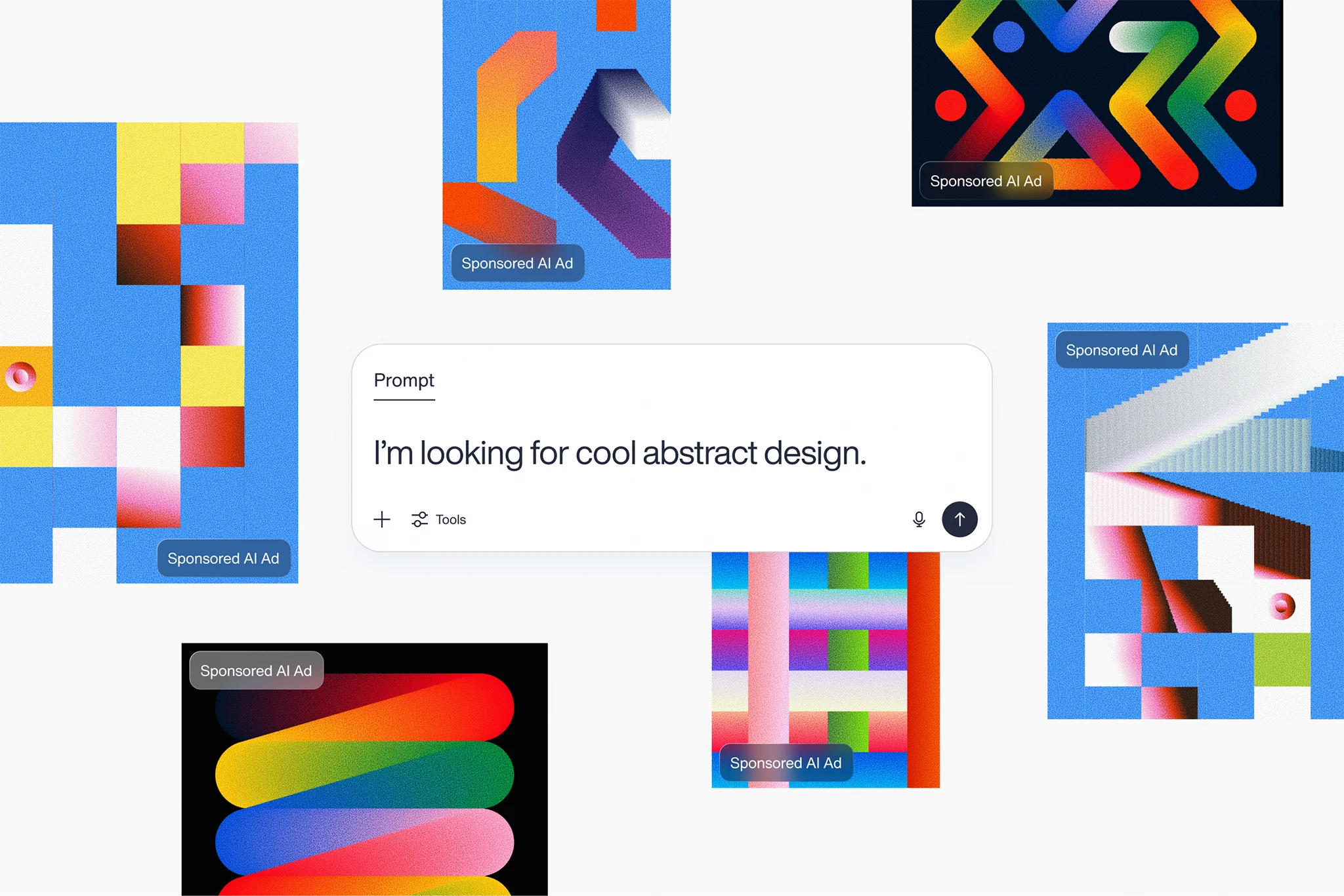
ChatGPT ads are so-called sponsored recommendations that appear at the end of a ChatGPT response. They are clearly marked as “Sponsored” and are visually separated from the actual answer.
According to OpenAI The ads don't influence ChatGPT's responses. OpenAI also emphasizes that transparency and trust are central principles when introducing advertising in ChatGPT. The really new thing about this advertising format: After clicking on an ad, users can interact directly with the advertising brand in the chat. People don't land on a landing page, they start a conversation. Ask questions, compare options, make buying decisions, all within ChatGPT.
For advertisers, this opens up completely new opportunities to reach potential customers at the moment of highest purchase intent. OpenAI currently only displays ads for adult users in the USA, on the free version and the new ChatGPT Go subscription. Plus, Pro, Business, Enterprise, and Edu accounts remain ad-free. OpenAI does not show advertising on sensitive topics such as politics, health or mental health and completely excludes minors.
Why ChatGPT Ads are no accident
The introduction of advertising in ChatGPT is the result of a strategic development that has built up over the entire year 2025. OpenAI CEO Sam Altman explained in OpenAI podcast that he is “not fundamentally against advertising”. In August 2025, ChatGPT launched Go in over 170 countries and thus laid the basis for an ad-financed model.
The economic logic behind this is clear: OpenAI has around 800 million weekly users, of which only a fraction pays for a subscription. At the same time, infrastructure costs are huge. The roll-out of advertising should help finance free access in the long term.
The figures: What ChatGPT ads cost and what you get in return
OpenAI positions advertising in ChatGPT in the premium segment: The CPM (cost per mille) is around 60 dollars. The price is therefore significantly higher than for most established digital channels and is at the level of premium streaming inventory. Getting started is also not cheap. According to ADWEEK, OpenAI requires a minimum budget of 200,000 dollars, some advertisers were even approached for 250,000 dollars.
Billing is carried out using an impression-based model (CPM), not by click. For many advertisers and companies, this raises the question of whether the money is worthwhile at this point. What you get in return is currently manageable. OpenAI only provides high-level metrics during the test phase. In concrete terms, this means:
- Only total impressions and total clicks as reporting
- No conversion tracking
- No demographic insights
- No purchase attribution
- No self-serve buying interface
ChatGPT ads currently function purely as a brand awareness channel, not as a performance channel. This may change after the test phase, but at the start, the tools that data-driven marketing teams are used to are missing. For advertisers and advertisers who depend on measurable results and want to know exactly where their money is going, this is a real hurdle.
What ChatGPT Ads are changing across the marketing ecosystem
Advertising in ChatGPT is not an isolated product. It is a symptom of a larger change: the shift from the search economy to the answer economy. People don't search anymore, they ask. And they get one answer instead of ten blue links in the search results. This has far-reaching consequences:
- The customer journey is becoming shorter because research, comparison and purchase can take place in a single conversation.
- Organic visibility in AI answers is becoming a decisive competitive advantage. Anyone who doesn't show up there simply doesn't exist for a growing number of users.
- Classic keyword targeting loses relevance because ChatGPT Ads rely on semantic intent matching: The ad is not placed on a keyword, but on the context of an entire conversation.
- Attribution is becoming more complex because a single conversation can reference multiple brands before a decision is made.
ChatGPT is not alone. Google is responding with AI Overviews and AI Mode and, according to industry reports, is testing its own advertising formats in Gemini. Meta monetizes its own AI chatbot and rolled out Threads Ads globally in January 2026. Microsoft Copilot is already showing ads similar to Search. Perplexity has tested its own advertising formats and paused them again. The discussion about advertising in AI-based search therefore concerns not just one company, but the entire industry. For marketing decision makers, these are no longer marginal issues.
What that means for your existing strategy
ChatGPT ads don't replace an existing channel. Google and Meta remain relevant. But budget distribution will shift, and content and infrastructure requirements will fundamentally change. SEO and GEO form the basis. Anyone who does not appear in organic AI answers is difficult to see, even with paid ads.
Content must change: away from pure keyword optimization, towards content that works as an answer to specific questions. Clear, structured, fact-based, with strong entity signals. Structured data and schema markup are gaining in importance because AI models recognize brands and companies better when their digital presence is cleanly structured. Clean data becomes the foundation of every visibility strategy.
Anyone who does not have clean tracking and centralized evaluation today will not be able to integrate new channels in a meaningful way. The companies that are now strengthening their digital base are the ones that remain visible in the new world of AI-powered answers. Not because they have the biggest budgets, but because their content, structure and brand signals are right.
Conclusion
Advertising in ChatGPT is coming. Not yet comprehensive, not yet perfect, but the direction is clear. The shift from search to answer changes how brands are found, compared and selected. And the basis for being visible in this new world is not an ad strategy. It is a strong digital presence: clean SEO, well-thought-out GEO, content that works as an answer and a brand presence that creates trust.
That's where we come in. BWS is your digital growth partner. We're here to help you when the rules of the game change. We focus on transparency, creative technology and measurable results. With SEO, GEO, web development and branding Let's build the basis on which digital visibility also works in an AI-driven world. Everything in-house. No detours.
FAQ
What are ChatGPT Ads?
ChatGPT Ads sind Sponsored Recommendations, die am Ende von ChatGPT Antworten angezeigt werden. Diese Werbeanzeigen sind klar als Werbung gekennzeichnet und ermöglichen es Nutzer:innen, direkt im Chat mit der werbenden Marke zu interagieren.
How much do ChatGPT Ads cost?
Der CPM liegt aktuell bei circa 60 Dollar. Das Mindestbudget für den Einstieg beträgt 200.000 Dollar. Der Preis positioniert die Werbung in ChatGPT damit deutlich über den meisten anderen digitalen Werbekanälen.
Who sees ChatGPT Ads?
Aktuell nur erwachsene Nutzer:innen in den USA auf dem Free Tier und ChatGPT Go. Plus, Pro, Business, Enterprise und Edu bleiben werbefrei. Minderjährige sehen keine Werbung.
How are ChatGPT Ads different from Google Ads?
ChatGPT Ads setzen auf Semantic Intent Matching statt Keyword Targeting. Die Anzeige wird auf den Kontext eines gesamten Gesprächs ausgerichtet, nicht auf ein einzelnes Suchwort. Es gibt aktuell kein Self Serve Interface und kein Conversion Tracking. Google Ads bieten dagegen granulare Daten, jahrzehntelang optimierte Bidding Systeme und Zugang zu deutlich mehr Themen und Werbeformaten.
What do ChatGPT Ads mean for SEO and GEO?
SEO und GEO werden wichtiger, nicht weniger wichtig. Organische Sichtbarkeit in KI Antworten ist die Basis, auf der auch bezahlte Werbung aufbaut. Wer in ChatGPT Antworten nicht organisch auftaucht, wird es auch mit Werbeanzeigen schwer haben. BWS unterstützt euch als digitaler Wachstumspartner dabei, genau diese organische Sichtbarkeit aufzubauen und zu stärken.