Google Preferred Sources: When Your Audience Picks You
l
Webdesign
Webentwicklung
Branding
Animation
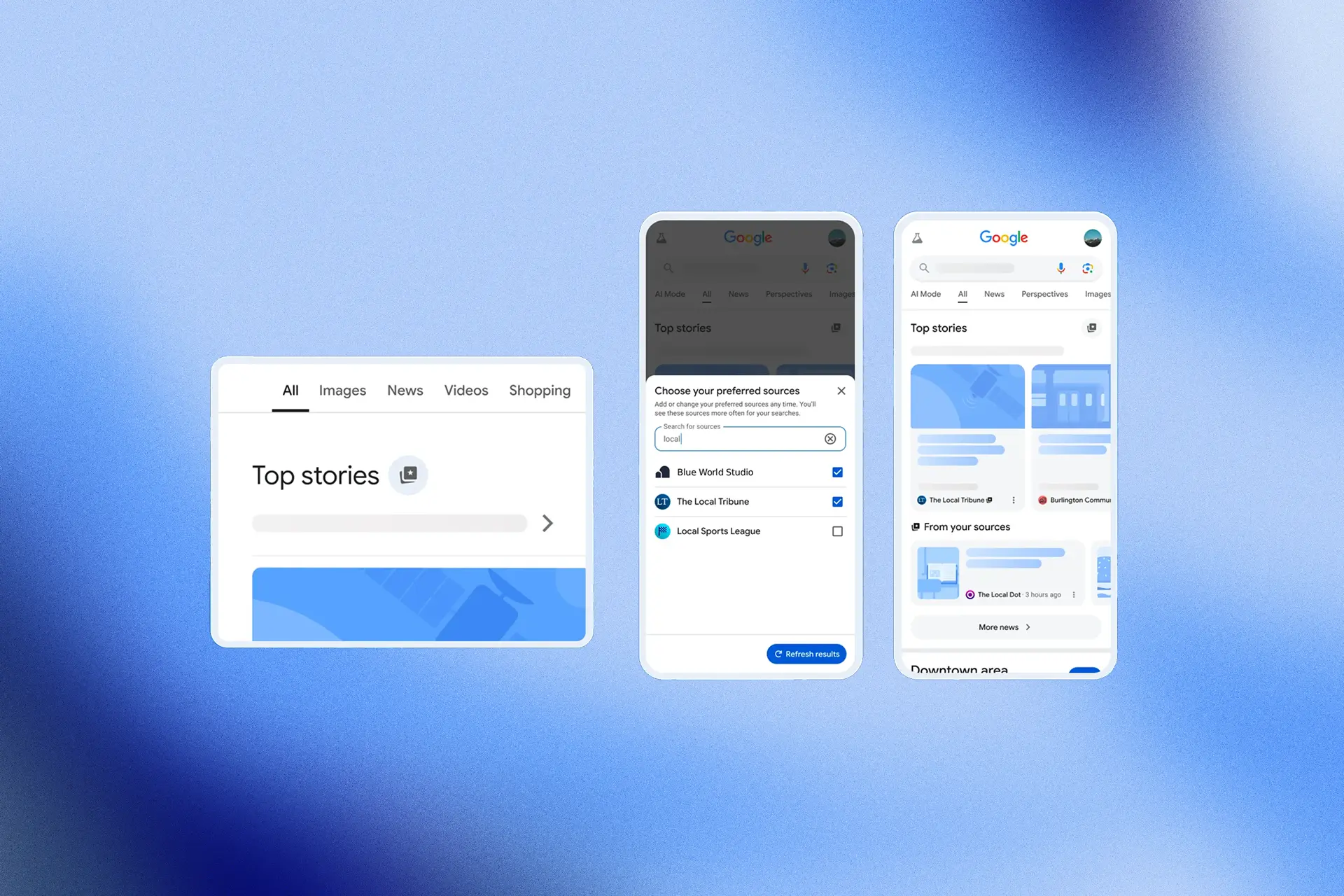
Preferred Sources move into AI Overviews
Google is bringing its Preferred Sources feature straight into AI Overviews and AI Mode. The company lays it out on its own blog. Until now, the label only showed up in Top Stories.
From here on, Preferred Sources are flagged inside AI answers too, whenever a selected site appears in the response. Setup is light. People add their favorite sources once in their search settings, and Google then highlights those sources clearly.
That shifts how visibility works. Ranking used to decide on its own who shows up in the answer. Now a second factor sits alongside it, the audience's own choice. Google reports that people are about twice as likely to click through to a Preferred Source.
Why newsrooms are already asking readers to pick them
Publishers caught on fast. Plenty of news and magazine sections now actively ask their readers to set them as a Preferred Source, and Google encourages exactly that in its documentation for site owners.
We expect this prompt to become standard quickly. Where a quiet link sits today, a fixed module will sit inside the article tomorrow. Once someone has marked a source, they see its content more often and more prominently.
For brands, the takeaway is simple. The race for preferred status starts now, not once the feature is everywhere. Ask early, and you collect the picks while others still hesitate.
Your community turns into a visibility lever
The real value lives in an audience you already have. A loyal readership, happy customers and an active community are hard visibility capital in AI Search.
So far, that loyalty mostly paid into direct visits and newsletters. With Preferred Sources, it becomes a signal that supports your presence in AI answers. Every person who picks you raises the odds that your content surfaces in their responses.
This matters most for content-driven brands. Startups with a strong blog, cultural brands with a devoted following and sustainability-led companies with a clear stance hold an edge here, because their community chooses on purpose.
One sober note belongs here. Right now the label applies when a selected site already appears in the answer. Google says it is working toward using the choice as a stronger signal, but nobody should bank on that yet. A solid content base stays the prerequisite.
How we build the selection link into your content
Our approach is direct. We place the "add as a Preferred Source" link where your readers already are, inside the article and across the content around your core topics. One click, and the person has saved you.
It is not automatic. The link only works when the content behind it is worth citing. Clean structure, clear entities and fresh articles remain the foundation that makes the choice count. That is what we work on in our SEO and GEO practice, whatever platform your site runs on.
How visibility in AI Search gets built step by step shows in our Altano case in SEO and AI Search. The selection link is a new building block here, not a replacement for the substance underneath.
If you want to fold the selection link into your content the smart way, let's talk.
Sources: Google, blog.google; SEO Südwest, seo-suedwest.de.
Conclusion
Google Preferred Sources turn a loyal audience into a visibility factor inside AI Overviews. Brands that add the selection link early and keep their content genuinely citable collect preferences while competitors hesitate. Ranking still matters, but it now sits next to a second lever you can actively grow.
FAQ
What are Google Preferred Sources?
Google Preferred Sources are a setting in Google Search. People use it to choose websites whose content they want to see more often. The labels now appear in AI Overviews and AI Mode as well, not just in Top Stories.
How do I set a website as a Preferred Source?
You add it through the personalization settings in Google Search. Any site that publishes fresh content regularly is eligible. Many publishers now link this setting straight from their articles so readers can pick them in one click.
Are Preferred Sources a ranking signal in AI Overviews?
Not in the classic sense yet. For now, a Preferred Source is highlighted when it already appears in the answer. Google has said it is working toward using the choice as a stronger signal, so a citable content base stays essential.
What do Preferred Sources mean for SEO and GEO?
They add a second factor next to ranking, the audience's deliberate choice. For SEO and GEO, reach and community loyalty now feed more directly into AI answer visibility. Structuring content well and actively offering the selection connects both levers.
How can brands get their audience to pick them?
The most effective route is a direct link in the content that leads to the selection setting. Place it where loyalty is already high, such as blog posts and the content around a brand's core topics. Google reports people are about twice as likely to click through to a Preferred Source, so the prompt pays off.