Google Search Console AI Performance Report: First Data for AI Search
l
Webdesign
Webentwicklung
Branding
Animation
What Google Introduced on June 3
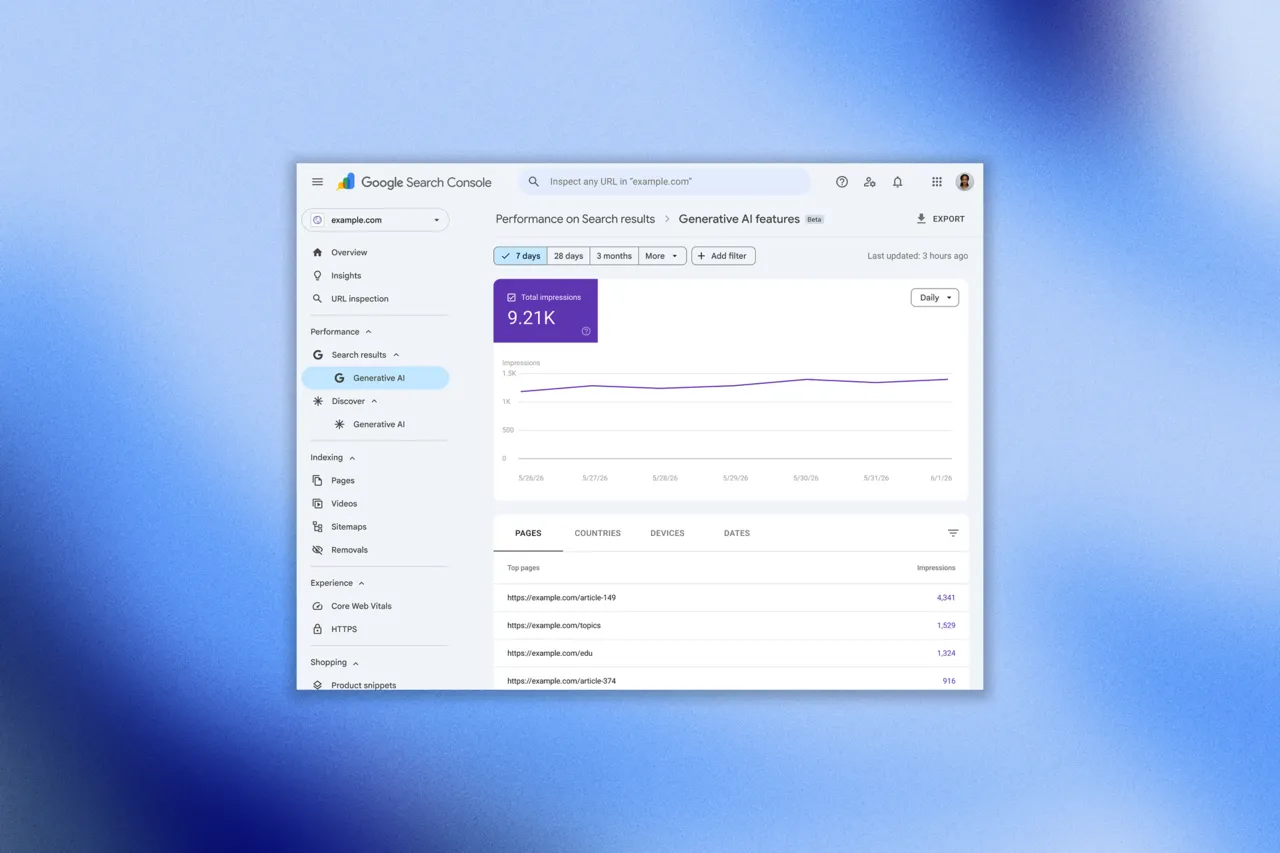
Google has added dedicated Generative AI performance reports to Search Console. For the first time, these reports show in isolation how often a site’s URLs appear inside AI-powered search features.
Until now, this data was included in the standard performance report but could not be separated from classic organic impressions. That changes with this update. AI visibility now has its own view, directly inside the tool most SEO and marketing teams already use daily.
Five Dimensions, No Click Data
The report delivers impressions broken down by pages, countries, devices, and dates. For the first time, it becomes possible to answer which specific URLs appear in AI features, in which markets, and on which devices.
What the report does not include is significant. There are no click metrics, no CTR, no average position, and no query data. Visibility can now be measured. The traffic effect of that visibility remains unanswered for now.
Google states that additional metrics will be added “over time.” No specific timeline is given.
Two Reports: Search and Discover Separated
The new section splits into two views. One covers generative AI features within Search (AI Overviews and AI Mode), the other covers generative AI features in Discover.
The separation makes sense because the surfaces work differently. AI Overviews appear on informational queries as a summary above organic results. AI Mode is Google’s standalone chat interface within Search. Discover targets users without active search intent through a personalized content feed.
For sites with different content formats, this breakdown can reveal through which channel AI visibility is actually generated.
Rollout Is Gradual: When to Expect Access
Anyone not yet seeing the report in Search Console will need to wait a little longer. Google is rolling it out in stages, starting with a selected subset of websites. In Germany and other markets outside the UK, access will become available gradually. Google has not announced a specific date for the full rollout.
According to early reports from the rollout phase, data in the report starts from May 18, 2026. There is no historical data. Longer-term comparisons will only become possible in a few months.
Anyone with access already should set a baseline now. How visibility develops over the coming months will show which content gains relevance in AI search and which does not.
Sources: Google Search Central Blog, developers.google.com; Search Engine Journal, searchenginejournal.com; PPC.Land, ppc.land.
Conclusion
Google closes a measurement gap that has existed since AI Overviews launched. Impressions by page, country, device, and date are a solid first data point for anyone tracking AI visibility strategically. What’s still missing is click and query data. Until those follow, the report answers the question of visibility, but not yet the question of actual traffic impact.
FAQ
Where do I find the new Generative AI report in Search Console?
The report is available in Search Console under "Search results" once it has been enabled for your property. Google is rolling it out in stages. Anyone who doesn’t see it yet will need to wait a little longer.
Why doesn’t the report show click data?
Google launched the report with impressions data first. Click and query data will be added “over time” according to Google. No specific date has been given.
What is the difference between AI Overviews and AI Mode in this report?
AI Overviews are the AI-generated summaries that appear above classic search results. AI Mode is Google’s standalone chat interface within Search. Both are reported separately from Discover data in the new report, but combined within a single Search view.
From when is data available in the report?
According to early reports from the rollout phase, data in the report starts from May 18, 2026. There is no historical data. Longer-term comparisons will only become possible in a few months.
What should I do if I already have access to the report?
Now is a good time to document a baseline. Note which pages are generating AI impressions and in which markets. That starting point will serve as a comparison in three to six months.